
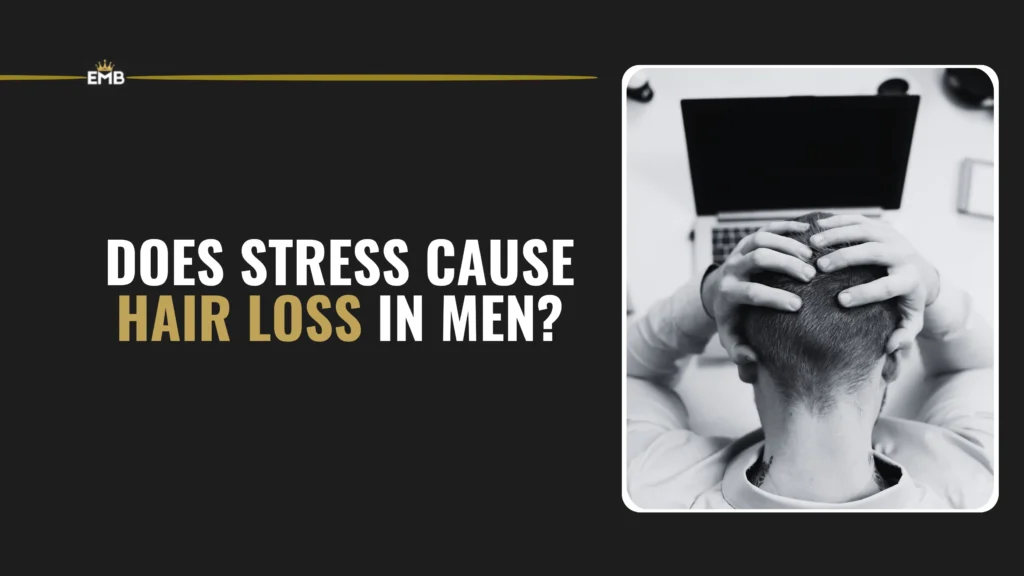
Yes, stress can cause hair loss in men. A major stressful event can trigger heavy shedding about two to three months later, a condition called telogen effluvium. The good news is that this type of hair loss is usually temporary, and most men’s hair grows back within six to eight months once the cause is handled.
Key takeaways
- – Stress hair loss in men usually shows up 2–3 months after the stressful event.
- It causes thinning all over the scalp, not a receding hairline.
- Acute cases usually last 3–6 months and most resolve on their own.
- Stress doesn’t cause male pattern baldness, but shedding can make it look worse for a while.
- Shedding that lasts longer than 6 months, or comes with bald patches, needs a doctor.
How Does Stress Cause Hair Loss?
Each hair goes through a cycle:
- Growth phase (anagen): The hair grows for several years.
- Transition phase (catagen): Growth stops.
- Resting phase (telogen): The hair rests for a few months, then falls out so a new one can grow.
Normally, only about 5% of your hairs are resting at any time. You lose up to about 100 hairs a day, which is normal.
A big shock to your body can push many hairs into the resting phase at once. Months later, they all fall out together. Cleveland Clinic says people with telogen effluvium may lose up to 300 hairs a day.
What Triggers Stress Hair Loss?
“Stress” here means stress on your body, not just a bad week. Common triggers include:
- High fever or a serious infection
- Major surgery or an injury
- Intense emotional stress, like a death in the family, a divorce or a job loss
- Crash diets, low-protein diets or fast weight loss
- Thyroid problems
- Some medicines, such as certain blood pressure drugs and antidepressants
Try this: Think back 2–3 months before the shedding started. That’s where the trigger usually is.
Is It Stress or Male Pattern Baldness?
| Stress shedding (telogen effluvium) | Male pattern baldness | |
|---|---|---|
| How it starts | Fairly suddenly, 2–3 months after a trigger | Slowly, over years |
| Where | All over the scalp | Temples and crown |
| Hairline | Usually stays the same | Moves back in an “M” shape |
| Does it grow back? | Usually, yes | Not on its own |
| Main fix | Remove the trigger and wait | Treatments like finasteride and minoxidil |
You can have both at the same time. Stress shedding can make existing pattern thinning look worse. Learn more about the main causes of male baldness.
How Long Does Stress Hair Loss in Men Last?
According to Cleveland Clinic:
- Shedding usually lasts 3 to 6 months.
- Acute cases (shorter than 6 months) resolve in about 95% of people.
- Once the cause is handled, most cases clear up within 6 to 8 months.
- New growth usually shows up after the shedding stops.
Hair grows slowly, so it may take a while before your hair looks full again. Be patient and track progress with photos.
How to Reduce Stress Hair Loss
You can’t stop hairs that are already resting from falling out. But you can remove the trigger and support healthy regrowth.
- Find and treat the cause. If it’s a medical issue, like a thyroid problem, treatment usually helps your hair recover.
- Eat enough protein. Include eggs, fish, chicken, beans, Greek yogurt or tofu at each meal. Avoid crash diets.
- Protect your sleep. Aim for 7 or more hours. Our post on sleep habits that help you recover has a simple routine.
- Lower daily stress. Walk outside, lift weights or try slow breathing. If your mind won’t settle, try these simple ways to calm a racing mind.
- Be gentle with your hair. Use a mild shampoo and skip tight hairstyles while it recovers.
- Ask about minoxidil. Cleveland Clinic lists over-the-counter minoxidil as one option. Talk to a doctor first.
Don’t start iron or other supplements without a blood test. Too much iron can be harmful.
Can Stress Turn Your Hair Grey Too?
Stress is often linked to early greying, but genes play the biggest role. Read more about stress and early greying.
When to See a Doctor
Talk to a doctor or dermatologist if:
- Shedding lasts longer than 6 months.
- You see round bald patches.
- Your scalp is red, itchy, scaly or painful.
- You also feel very tired, cold or have weight changes. These can be signs of a thyroid problem.
- Hair loss started after a new medicine. Don’t stop it without talking to your doctor.
Mayo Clinic also advises seeing a doctor for sudden or patchy hair loss, or more hair loss than usual when you comb or wash your hair.
If you’d like a plan for protecting your hair long term, see our guide to proven ways to protect your hairline.
Frequently Asked Questions
Does stress cause hair loss in men?
Yes. Major physical or emotional stress can cause telogen effluvium, a temporary shedding that starts about 2–3 months later.
Will hair loss from stress grow back?
Usually, yes. Most acute cases resolve, and hair often grows back within 6 to 8 months after the cause is handled.
How can I tell if my hair loss is from stress?
Stress shedding is spread across the whole scalp and starts fairly suddenly after a trigger. Male pattern baldness is slow and starts at the temples or crown.
Can stress make you go bald permanently?
Stress shedding is usually temporary. It doesn’t cause male pattern baldness, but it can make existing thinning more noticeable for a while.
How much hair loss is normal per day?
Losing up to about 100 hairs a day is normal. People with telogen effluvium may lose up to 300.
Next step: Write down any big stressors from the last 3 months, take photos of your scalp, and check back in 6–8 weeks. If shedding hasn’t slowed, book a doctor’s visit.
This article is for information only and is not medical advice. Talk to a doctor about your own symptoms.