
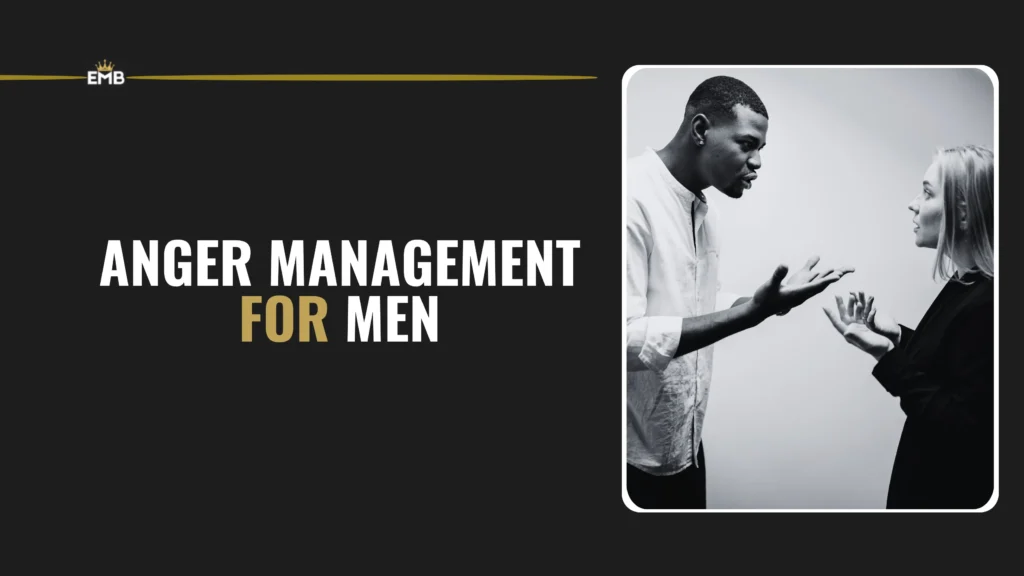
Getting angry is normal. Losing control of what you say or do is a different problem.
Maybe you snap at your partner after a long day. Maybe a small disagreement at work turns into an argument. Or perhaps you spend hours replaying something someone said and getting more frustrated every time.
You do not have to eliminate anger to manage it. The goal is to recognize what is happening, slow down your reaction, and deal with the problem without making it worse. Anger management is a set of skills that can help you do that.
This guide explains what anger management means, how to recognize anger issues in men, and what you can do when your temper starts getting the better of you.
What Is Anger Management?
Anger management is the process of learning to recognize anger, understand what triggers it, and respond in ways that are appropriate and respectful.
It does not mean pretending you are never angry. It also does not mean allowing people to treat you badly without saying anything.
A useful goal is to express anger assertively rather than aggressively. That means communicating what is wrong, setting boundaries, and asking for what you need without threatening or hurting someone.
For example:
- Aggressive: “You never listen. Shut up.”
- Passive: “Whatever. Forget it.”
- Assertive: “I’m frustrated because I feel like I’m being interrupted. Can we finish one point at a time?”
The third response still communicates a problem. It simply gives you a better chance of solving it.
Why Anger Can Become a Problem
Anger itself is not automatically unhealthy. It can signal that something matters to you, that a boundary has been crossed, or that a situation needs attention.
The problem is what happens when anger becomes frequent, intense, difficult to control, or destructive. Uncontrolled anger can affect relationships, work, and overall well-being.
You may need to work on your anger if you regularly:
- Shout, insult, or threaten people during disagreements
- Break things or act aggressively
- Hold grudges for long periods
- Feel angry much of the time
- Have repeated conflicts with family, friends, or coworkers
- Regret what you say or do after an argument
- Feel that your anger is affecting important parts of your life
These are warning signs, not a diagnosis. If anger is causing serious problems, professional support can help you understand what is happening and develop a plan to change it.
Anger Issues in Men: What Can Make Them Harder to Manage?
There is no single way men experience anger, and not every man has the same triggers or coping habits.
However, some men may have learned to express difficult emotions mainly through anger. Stress, frustration, fear, sadness, or feeling disrespected can sometimes come out as irritation or aggression. Social expectations around masculinity can also make it harder for some men to talk about emotions or ask for help.
That does not mean anger is “just how men are.” It means it can be useful to look beyond the immediate outburst.
Ask yourself:
“What was I feeling before I got angry?”
Sometimes the answer is frustration. Sometimes it is embarrassment, disappointment, exhaustion, or feeling powerless.
Understanding the feeling underneath the anger can help you respond to the actual problem instead of only reacting to the emotion.
10 Practical Anger Management Tips for Men
1. Learn Your Early Warning Signs
Anger usually gives you clues before it becomes an outburst.
You might notice:
- A faster heartbeat
- Tense muscles
- Clenched fists
- Feeling hot
- Irritability
- Difficulty relaxing
- A strong urge to argue or prove your point
These are common signs of anger. Learning to recognize them early gives you a chance to intervene before the situation escalates.
Try this: The next time you feel irritated, pause and ask:
“What am I noticing in my body right now?”
You do not need to analyze everything. Just noticing the warning signs is a useful first step.
2. Take a Break Before You React
When you are highly angry, trying to win an argument immediately is often a poor strategy.
If you notice yourself getting close to losing control, give yourself time to calm down before continuing the conversation.
You might say:
“I’m getting too frustrated to have a productive conversation right now. I need a little time, and I’ll come back to this.”
The important part is to take a break without using it as a way to punish someone or avoid the issue forever.
If you are driving and becoming aggressive, prioritize safety. Slow down, avoid confrontation, and give yourself space from the situation.
3. Use Slow Breathing to Reduce the Intensity
Simple relaxation techniques can help reduce the physical arousal that comes with anger. Deep breathing is one practical option.
Try this:
- Stop what you are doing.
- Breathe slowly and comfortably.
- Pay attention to the feeling of the breath.
- Continue for a few minutes.
- Return to the situation only when you feel more settled.
The goal is not to force yourself to feel happy. It is to create enough space to choose your next response.
4. Challenge the Thought That Is Fueling Your Anger
Anger can become stronger when you interpret a situation in the most extreme way possible.
For example:
“He interrupted me. He has no respect for me.”
Maybe he was being disrespectful. Maybe he was distracted. You do not have to assume the worst before you have enough information.
Try asking:
- What actually happened?
- What am I assuming?
- Is there another explanation?
- What response would help me solve this?
This is similar to a cognitive-behavioral approach, which can help people identify unhelpful thought patterns and develop more constructive responses.
5. Communicate the Problem Without Attacking the Person
If something is bothering you, say what happened and what you need.
A simple structure is:
“When [situation] happens, I feel [emotion]. I would like [specific request].”
For example:
“When plans change without telling me, I feel frustrated. I’d appreciate a quick message next time.”
This is more useful than:
“You always do whatever you want.”
The first statement addresses a specific problem. The second turns the conversation into a fight about someone’s character.
6. Identify Your Triggers
A trigger is something that tends to bring on anger.
Common triggers can include:
- Traffic and driving
- Work pressure
- Relationship disagreements
- Feeling ignored or disrespected
- Financial stress
- Lack of sleep
- Repeated interruptions
- Feeling that things are out of your control
Keep a simple anger log for a week:
| Situation | What happened? | What did I feel? | How did I react? |
| Work meeting | Someone interrupted me | Frustrated | Spoke sharply |
| Traffic | Driver cut me off | Angry | Started yelling |
| Home | Plans changed | Disappointed | Became quiet and resentful |
After a few entries, look for patterns.
You may discover that your biggest problem is not one specific person. It may be a combination of stress, poor sleep, and reacting too quickly.
7. Make Your Daily Routine Less Stressful
Anger is not always about the immediate situation. Stress can make it harder to manage your reactions.
Regular exercise can help you decompress and reduce stress. Activities such as walking, running, swimming, and yoga are practical options.
You can also make small changes that reduce unnecessary pressure:
- Leave earlier for work
- Take a short break during a stressful day
- Avoid difficult conversations when you are exhausted
- Make time for activities that help you relax
- Get support when you are dealing with ongoing stress
These habits do not replace anger management skills, but they can make those skills easier to use.
8. Stop Using Alcohol or Other Substances as Your Main Coping Strategy
Some people use alcohol or drugs to deal with anger or stress. That can make it harder to manage reactions safely.
The NHS advises against using alcohol, cigarettes, gambling, or drugs to relieve anger because they can contribute to poor mental health.
If you notice that your anger is closely connected to drinking or substance use, it is worth discussing both issues with a qualified professional.
9. Practice Assertiveness Instead of Trying to “Win”
You can be firm without being aggressive.
Assertiveness means communicating your needs clearly while respecting the other person. It does not mean being passive, and it does not mean getting your way every time.
For example:
“I’m not comfortable with that. I’m willing to discuss another option.”
That is a boundary.
“Do it my way or else.”
That is a threat.
The difference matters.
10. Repair the Damage After an Outburst
If you lose your temper, take responsibility for what you did.
A useful apology is specific:
“I raised my voice and said something hurtful. That was not okay. I’m sorry. I’m going to work on handling these conversations differently.”
Avoid turning the apology into another argument:
“I’m sorry, but you made me angry.”
You can discuss what triggered the conflict later. First, acknowledge your own behavior.
If anger has damaged a relationship, rebuilding trust may take time. Consistent changes matter more than one apology.
Common Mistakes That Make Anger Worse
“I just need to let it all out.”
Expressing anger aggressively is not the same as managing it. Yelling, threatening, or breaking things may make a situation worse rather than solve it.
“I should never feel angry.”
Trying to eliminate every angry feeling is unrealistic. A better goal is to recognize anger and respond to it more effectively.
“I’ll deal with it when I’m really angry.”
Anger management works best when you practice skills before you need them. Breathing, recognizing triggers, and communicating calmly are easier to use when they are familiar.
“If I apologize, I’m admitting I’m weak.”
Taking responsibility is not weakness. It is a practical part of repairing relationships and changing behavior.
When Should You Seek Professional Help?
Consider speaking with a licensed mental health professional if:
- Your anger feels out of control
- It is affecting your relationships or work
- You are frequently getting into conflicts
- You are acting aggressively or violently
- Your own efforts are not helping
- You are also struggling with anxiety, depression, trauma, or substance use
A psychologist or other qualified professional can help you identify triggers, examine thought patterns, and develop strategies that fit your situation. Anger management may involve individual counseling, group programs, or other forms of therapy.
If you are in the United States, you can start by looking for a licensed mental health professional through your state licensing board or a reputable professional directory.
If you feel you may hurt yourself or someone else, move away from the situation and seek immediate help.
A Simple 7-Day Anger Management Plan
You do not need to change everything at once. Start with one small habit each day.
| Day | Focus | What to do |
| 1 | Notice | Write down one situation that made you angry. |
| 2 | Warning signs | Identify two physical signs you notice before an outburst. |
| 3 | Pause | Practice taking a short break before responding. |
| 4 | Breathing | Practice slow breathing for a few minutes. |
| 5 | Triggers | Look for a repeated pattern in your anger log. |
| 6 | Communication | Practice making one clear, respectful request. |
| 7 | Review | Identify what helped and choose one habit to continue. |
The goal is not to become perfectly calm in seven days. It is to start building a repeatable process.
Final Thoughts
Anger management for men is not about becoming passive or pretending that nothing bothers you.
It is about learning to recognize your emotions, control your reactions, and handle problems in a way that protects your relationships and your own well-being.
Start with one skill: notice your warning signs, pause before reacting, and communicate the problem clearly.
If anger is causing serious problems, do not rely on willpower alone. Professional support can help you develop a more effective plan.
FAQ
What is anger management?
Anger management is learning to recognize anger, understand what triggers it, and respond in ways that are appropriate and respectful. It focuses on managing reactions rather than eliminating anger.
What are the best anger management tips for men?
Start by recognizing your early warning signs, taking a break before reacting, using slow breathing, identifying triggers, and communicating your needs clearly. Regular exercise and stress management can also help.
Is anger normal for men?
Yes. Anger is a normal human emotion, and men are not the only people who experience it. The important question is whether the way you express anger is causing problems or harming others.
How do I stop getting angry so quickly?
You may not be able to prevent every angry feeling, but you can learn to recognize your triggers and warning signs earlier. Taking a break, using relaxation techniques, and challenging unhelpful thoughts can help you respond more effectively.
What are some good anger management books?
Look for books that teach practical skills such as relaxation, communication, and changing unhelpful thought patterns. The APA recommends Anger: A Guide to Managing Your Emotions by Carol Tavris as a resource for understanding anger.
When should a man seek help for anger issues?
If anger is affecting your relationships, work, or daily life, or if you are acting aggressively or violently, it is worth seeking professional help. A qualified mental health professional can help you develop a plan.
Can anger management help with relationship problems?
It can help you communicate more calmly, recognize triggers, and respond to conflict more constructively. If anger has seriously affected a relationship, individual or couples therapy may also be useful.