
You probably did not think much about your hair until something changed. Maybe you started noticing more strands in the shower. Maybe your pillow had more hair than usual. Or your barber mentioned that your hair looks thinner on top.
When that happens during a stressful time in life, the question naturally comes up. Is stress making my hair fall out?
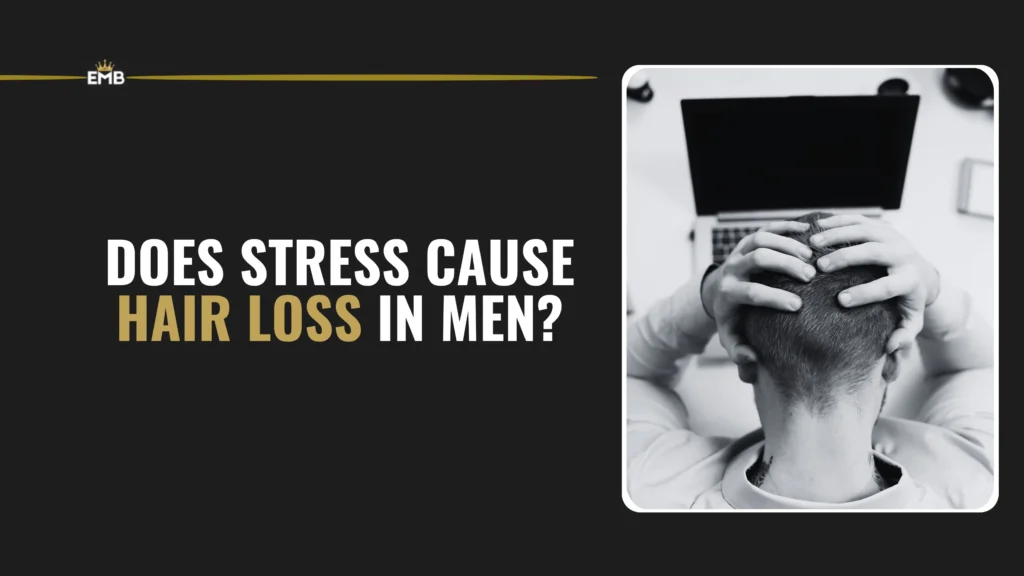
The short answer is yes. Stress can cause hair loss in men. But it is not always the same type of hair loss most men worry about.
Stress can trigger temporary shedding. It can also make existing hair loss look worse. Understanding the difference helps you respond calmly instead of assuming the worst.
How Your Hair Growth Cycle Works
Hair is constantly growing and shedding. That is normal. Each hair follicle goes through a natural cycle that repeats over time.
There are three main phases.
- Growth phase
This is when the hair actively grows. This phase can last several years. - Transition phase
The hair stops growing and prepares to shed. - Resting phase
The follicle rests before releasing the hair and starting the cycle again.
Most of the hair on your head stays in the growth phase. Only a small percentage is normally in the resting phase. When stress interferes with this cycle, more follicles move into the resting phase at the same time. That shift leads to noticeable shedding.
The Type of Hair Loss Caused by Stress
The most common type of stress related hair loss is called telogen effluvium. This condition happens when physical or emotional stress pushes a large number of hair follicles into the resting phase.
A few months later, those hairs begin to fall out. Many men panic at this point because the shedding can look dramatic.
You may notice:
- More hair in the shower drain
- Strands falling out while combing
- Hair collecting on pillows or clothing
- Overall thinning across the scalp
The important thing to understand is that telogen effluvium usually affects the entire scalp rather than a specific pattern.
In many cases it is temporary once the body recovers from the stress.
Signs Your Hair Loss Might Be Stress Related
Not all hair loss comes from stress. Many men experience genetic hair loss as they age. So how can you tell the difference?
Hair loss related to stress often shows a few clear signs.
For example:
- Shedding begins after a stressful period
- Hair falls out across the whole scalp
- The hairline remains mostly unchanged
- Thinning appears suddenly rather than gradually
Another important detail is timing. Stress related shedding often starts two to three months after the stressful event. That delay can make the connection hard to notice.
In contrast, male pattern baldness usually develops slowly and follows a clear pattern such as a receding hairline or thinning crown.
Can Stress Make Male Pattern Baldness Worse?
Even if stress is not the main cause of your hair loss, it can still make things worse. Chronic stress affects the body in several ways.
It can increase inflammation, disrupt hormone balance, and raise levels of cortisol. These changes create an environment that is less supportive of healthy hair growth.
For men who already have a genetic tendency toward male pattern baldness, stress can speed up the appearance of thinning. So while stress may not be the root cause, it can push the process forward faster.
This is why managing stress is important if you want to protect your hair long term.
Common Stress Triggers That Affect Hair
Stress does not always come from dramatic life events. Often it builds quietly over time.
Many everyday pressures can affect your body more than you realize.
Some common triggers include:
- Long periods of work pressure
- Financial stress
- Lack of sleep
- Relationship problems
- Illness or recovery from surgery
- Extreme dieting or rapid weight loss
When the body experiences prolonged stress, it shifts energy toward essential survival functions. Hair growth becomes a lower priority. This is why shedding can increase during difficult periods.
How You Can Reduce Stress Related Hair Loss
The good news is that stress related hair loss often improves when stress levels are managed.
Small changes in daily habits can make a meaningful difference.
- Regular physical activity is one of the most effective tools. Exercise lowers stress hormones and improves blood flow to the scalp.
- Quality sleep also plays a major role. Aim for at least seven hours each night so your body can recover properly.
- Spending time outdoors can also help regulate mood and reduce mental tension.
Other helpful habits include:
- Taking breaks from constant screen time
- Practicing slow breathing or relaxation exercises
- Eating balanced meals that support overall health
- Staying socially connected with supportive people
None of these habits act like a quick fix. But together they create a healthier environment for both your mind and your hair.
When Hair Growth Usually Returns
One of the most frustrating parts of stress related hair loss is the timing. Shedding may begin months after the stressful period. Recovery can also take time.
In many cases, hair shedding slows down once the body stabilizes.
Hair follicles gradually return to their normal growth cycle. New hairs begin to grow again, although this process may take several months.
Patience is important here. Hair growth is naturally slow, so visible improvement does not happen overnight.
If the underlying stress improves and your health remains stable, your hair often recovers over time.
When You Should See a Doctor
Not every case of hair loss should be handled alone.
You should consider speaking with a doctor if:
- Hair loss becomes severe
- Bald patches appear
- Shedding continues for several months
- You notice scalp pain, redness, or irritation
A medical professional can evaluate your symptoms and check for other possible causes such as nutritional deficiencies or hormonal issues.
Getting proper guidance early can prevent unnecessary worry.
Final Thoughts
Hair loss can be stressful by itself, especially when you do not understand what is causing it. Stress can definitely contribute to hair shedding in men. In many cases, this type of hair loss is temporary and improves when your body recovers.
Taking care of your stress levels is not only good for your mental health. It also supports healthier hair. Focus on consistent habits that strengthen your body and mind. Exercise regularly, sleep well, eat properly, and give yourself time to recover from difficult periods.
Your hair often reflects what is happening inside your body. When you take care of yourself, your hair usually benefits too.