
Why Hair Loss Feels Like a Big Deal for Men
Most men don’t think about their hair much until they start losing it.
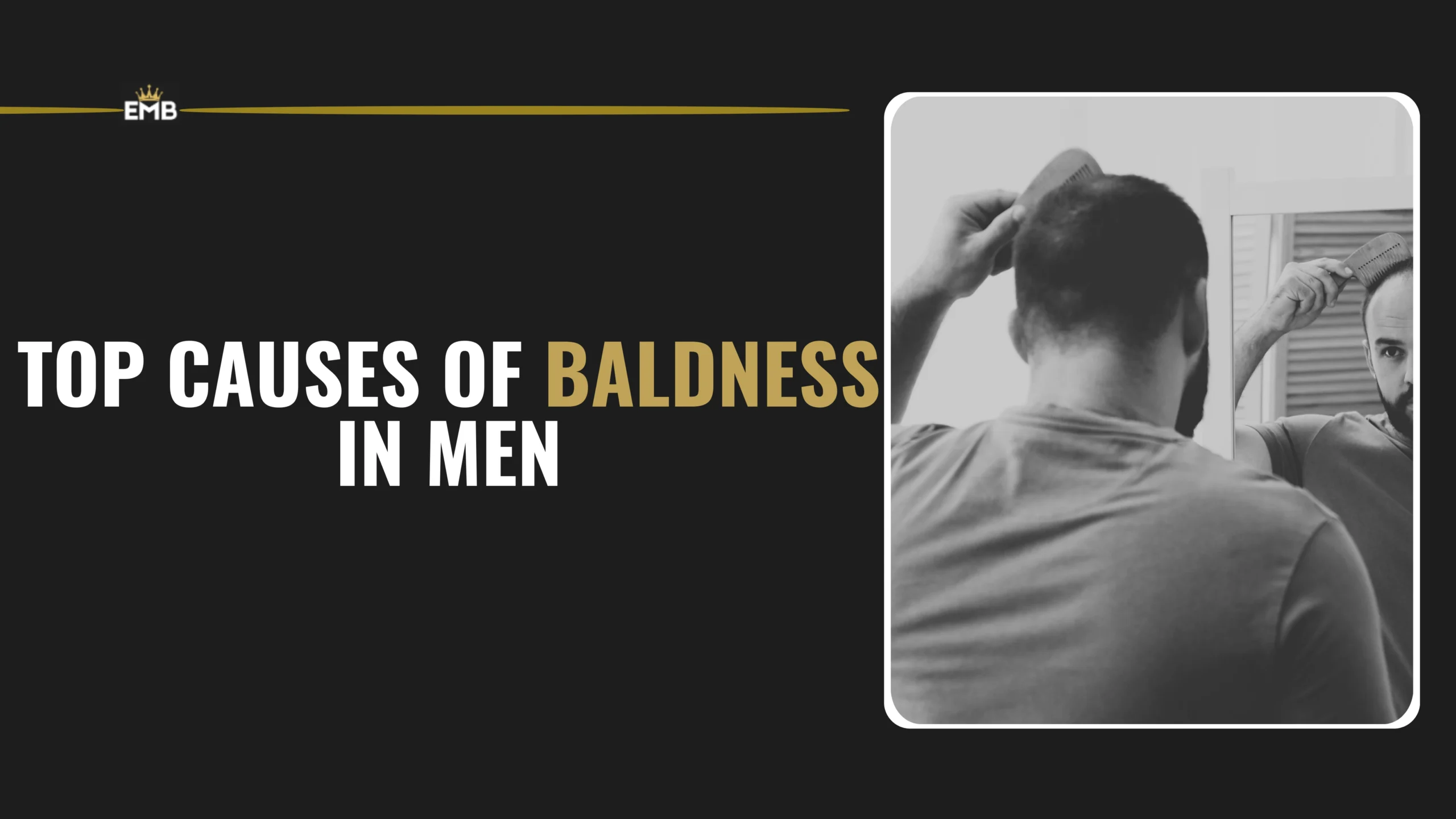
One day you notice extra strands in the shower. Then the mirror shows something new. The hairline looks a little higher. The crown looks thinner under bright light.
That moment hits harder than most people expect.
Hair loss is extremely common, but it still affects confidence. Many men connect their hair with youth, strength, and identity. So when it starts thinning, it can feel like something important is slipping away.
Here’s the truth.
Hair loss happens to most men at some point in life.
- Around two thirds of men experience some hair thinning by age 35
- By age 50, about 85 percent of men have noticeable hair loss
The important thing to understand is this. Baldness does not happen randomly. There are clear biological and lifestyle factors behind it.
If you understand the causes of baldness in men, you can make better decisions and avoid wasting time on myths or miracle products.
Let’s break down the real reasons men go bald.
Male Pattern Baldness: The Most Common Cause
When people ask why men go bald, the answer in most cases is male pattern baldness.
The medical name is androgenetic alopecia.
This condition affects millions of men worldwide and is the leading cause of hair loss.
What Male Pattern Baldness Actually Is
Male pattern baldness happens when hair follicles gradually shrink over time.
This shrinking process causes each new hair to grow thinner and shorter than the one before it. Eventually, the follicle may stop producing visible hair.
The main trigger behind this process is a hormone called DHT.
How It Usually Appears
Male pattern baldness tends to follow a predictable pattern.
Common signs include:
- A receding hairline at the temples
- Thinning at the crown
- Gradual hair loss across the top of the scalp
The sides and back of the head often keep their hair longer because those follicles are less sensitive to the hormone that drives hair loss.
Why Some Men Go Bald Earlier
Two men can live similar lifestyles and still experience very different hairlines.
The main reason is genetics.
Some men inherit hair follicles that are very sensitive to the hormone responsible for thinning. Others inherit follicles that are more resistant.
That difference decides how early hair loss begins.
Hormones and DHT: The Real Trigger
To understand male hair loss reasons, you need to understand DHT.
DHT stands for dihydrotestosterone. It is created when the body converts testosterone into a stronger hormone.
In men who are sensitive to DHT, the hormone attaches to hair follicles and slowly damages them.
Over time this leads to:
- Smaller hair follicles
- Shorter hair growth cycles
- Thinner and weaker hair strands
Eventually, the follicle becomes too small to grow normal hair.
A Common Misunderstanding About Testosterone
Many men believe high testosterone causes baldness.
That idea is misleading.
The real issue is not how much testosterone you have. The real issue is how sensitive your hair follicles are to DHT.
You can have normal testosterone and still lose hair early. Another man with higher testosterone may keep a full head of hair.
The difference lies in genetic sensitivity.
Genetics: The Inherited Factor
One of the most common questions men ask is this.
Is baldness inherited from the mother or the father?
The simple answer is both.
Hair loss is influenced by multiple genes that come from both sides of your family. That means your father, mother, grandparents, and even earlier generations can all play a role.
If several men in your family experienced early hair loss, the chances are higher that you might as well.
Unfortunately, genetics cannot be trained away.
Working out, eating clean, or increasing testosterone will not override the genes that control hair follicle sensitivity.
Healthy habits still matter, but they cannot completely stop genetic hair loss.
Stress and Lifestyle Factors
Genetics is the biggest driver of hair loss, but lifestyle also plays a role.
Poor habits can speed up shedding or weaken hair growth.
Chronic Stress
Long periods of stress increase cortisol levels in the body.
High cortisol can push hair follicles into a resting phase. When that happens, hair begins to shed more than usual.
This condition is called telogen effluvium.
Men dealing with heavy stress may notice:
- Increased hair in the shower
- More shedding while combing
- Sudden thinning across the scalp
Once stress levels improve, hair growth often recovers.
Poor Nutrition
Your hair needs nutrients to grow strong.
If your diet lacks key nutrients, hair health suffers.
Important nutrients include:
- Protein
- Iron
- Vitamin D
- Zinc
- Biotin
When the body lacks these nutrients, it prioritizes essential organs over hair growth.
Lack of Sleep
Sleep helps regulate hormones and supports recovery. Poor sleep over long periods can disrupt normal hair growth cycles.
Men who consistently sleep poorly may notice slower hair growth and increased shedding.
Medical Conditions That Can Cause Hair Loss
Not every case of hair loss comes from genetics.
Some medical conditions can trigger thinning or sudden shedding.
Examples include:
- Thyroid disorders
- Autoimmune conditions such as alopecia areata
- Severe infections
- Scalp diseases
Alopecia areata is an autoimmune condition where the immune system attacks hair follicles. This usually causes small round patches of hair loss.
If hair loss appears suddenly or in unusual patterns, it is wise to consult a doctor.
Medications That May Trigger Hair Loss
Some medications can cause hair shedding as a side effect.
Common examples include:
- Certain antidepressants
- Blood pressure medications
- Steroids
- Some acne treatments
If you suspect medication is affecting your hair, speak with your doctor before making any changes.
Never stop prescribed medication without medical guidance.
Grooming Habits That Can Damage Hair
Many men worry that wearing hats leads to baldness.
That idea is a myth.
Hats do not cause hair loss and they do not affect hair follicles.
However, certain grooming habits can damage hair over time.
These include:
- Very tight hairstyles that pull on hair
- Frequent use of heat styling tools
- Strong chemical treatments
- Rough brushing or combing
Repeated pulling can lead to traction alopecia, which is hair loss caused by constant tension on hair follicles.
Treat your hair with care, especially when it is wet.
Early Signs of Baldness Men Should Notice
Hair loss rarely happens overnight. It usually starts with small changes.
Some early signs to watch for include:
- A slowly receding hairline
- Thinning hair at the crown
- More hair left on pillows or in the shower
- Hair that feels finer than before
- Scalp becoming visible under bright light
Recognizing these early signs of male pattern baldness can help you act sooner rather than later.
What You Can Do About Hair Loss
The good news is that men have options.
Medical Treatments
There are proven treatments that help slow or manage hair loss.
The most common include:
- Minoxidil, a topical treatment that stimulates hair growth
- Finasteride, a medication that reduces DHT levels
- Low level laser therapy
Hair transplants are another solution. This procedure moves healthy follicles from the back of the scalp to thinning areas.
Modern techniques produce natural looking results when performed by skilled surgeons.
Lifestyle Support for Hair Health
Even though genetics plays the biggest role, good habits still support healthy hair.
Focus on:
- A balanced diet rich in protein and nutrients
- Regular exercise
- Stress management
- Quality sleep
- Good scalp hygiene
These habits help maintain strong hair and overall health.
Smart Grooming Choices
Sometimes the right grooming strategy can improve your appearance even if hair is thinning.
For example:
- Shorter hairstyles can reduce the contrast between thick and thin areas
- Textured cuts can add the appearance of volume
- A well maintained beard can balance facial features and create a strong look
Confidence often matters more than hair density.
Common Myths About Baldness
Hair loss comes with many myths that confuse men.
Let’s clear up a few.
- Wearing hats causes baldness. This is false.
- Washing hair frequently causes hair loss. This is false.
- Only older men lose hair. Many men start in their twenties.
- Supplements alone can reverse genetic hair loss. This is unlikely.
Understanding the facts helps you avoid wasting money on ineffective solutions.
When You Should See a Doctor
Some types of hair loss need medical attention.
You should consider seeing a doctor if you notice:
- Sudden hair loss
- Patchy bald spots
- Pain or itching on the scalp
- Rapid shedding within a short time
A medical professional can determine the exact cause and recommend the right treatment.
Final Thoughts
Hair loss is one of the most common experiences men face.
It does not mean you are weak. It does not mean you are unhealthy. In most cases, it simply means your genetics are expressing themselves.
Understanding the causes of baldness in men gives you power.
Instead of worrying, you can make informed choices about treatment, lifestyle, and grooming. Many men handle hair loss confidently and continue to look strong, sharp, and masculine.
At the end of the day, your character, discipline, and presence define you far more than your hairline ever will.