
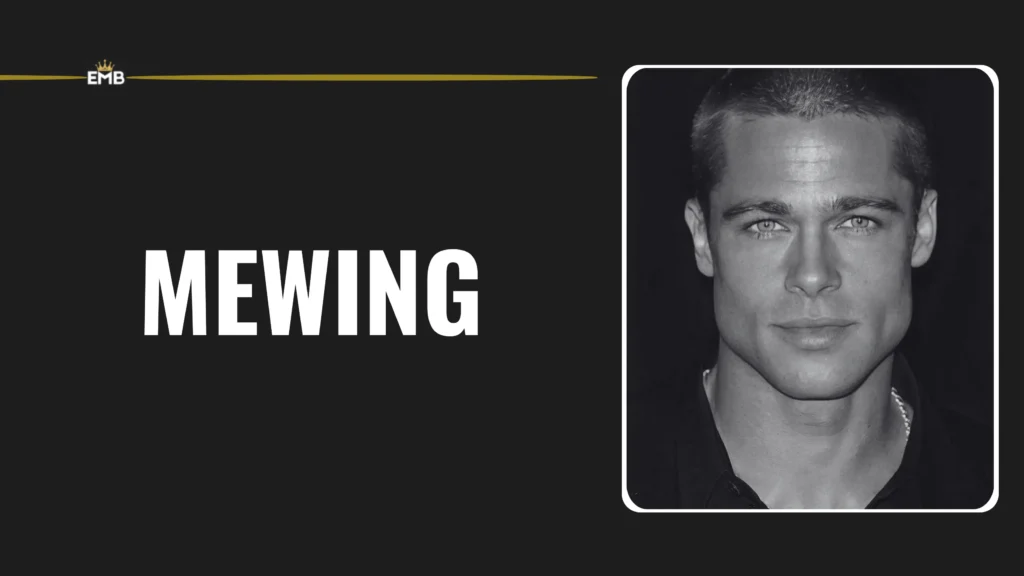
Mewing is the practice of resting your whole tongue against the roof of your mouth to try to sharpen your jawline. It’s popular on social media, but there’s no scientific proof that it reshapes the face in adults. The American Association of Orthodontists warns that doing it wrong can cause bite and jaw problems. Good tongue posture and nose breathing are healthy habits, but they won’t replace orthodontic care.
Key takeaways
- – Mewing means pressing your tongue flat against the roof of your mouth.
- The American Association of Orthodontists (AAO) says there’s no research showing it helps your jawline or oral health.
- Forcing it can shift teeth, change your bite or cause jaw (TMJ) pain.
- In adults, facial bones are done growing. Tongue posture won’t remodel them.
- If you have breathing, swallowing or bite problems, see a dentist, orthodontist or myofunctional therapist.
What Is Mewing?
Mewing is named after Dr. John Mew, a British orthodontist, and his son Dr. Mike Mew, who popularized it. The idea is to rest your whole tongue, including the middle and back, against the roof of your mouth instead of letting it sit low.
Supporters claim it can:
- Sharpen the jawline
- Improve facial balance
- Encourage nose breathing
The first two claims aren’t backed by research. The third, breathing through your nose, is a reasonable goal on its own.
Does Mewing Work?
Here’s what the evidence says.
In adults
By adulthood, your facial bones have finished growing. The American Association of Orthodontists says changing tongue posture does not restructure facial bones, and that your jawline and tooth alignment depend mainly on genetics, bone growth and muscle development.
The AAO also notes there’s no current research showing mewing benefits your jawline or oral health. Dramatic “before and after” photos online are often affected by lighting, camera angle, posture, facial expression and weight loss.
In children and teens
Tongue posture does matter during growth. A tongue that rests low or pushes against the teeth (sometimes called tongue thrust) can affect how teeth come in and how you swallow and speak. That’s why orthodontists and myofunctional therapists sometimes work on tongue habits in kids.
But this should be guided by a professional, not a TikTok video. Kids and teens with bite or breathing concerns should see an orthodontist.
What Are the Risks of Mewing?
The AAO warns that forcing your tongue into unnatural positions can:
- Push teeth unevenly, causing crowding or gaps
- Contribute to bite problems, like overbites, underbites or open bites
- Lead to jaw joint pain. Temporomandibular disorders (TMD) affect the joint that lets your jaw move, as Cleveland Clinic explains.
- Cause speech difficulties
Any damage could make future orthodontic treatment longer and more expensive.
What Is Proper Tongue Posture?
Most dental professionals describe a healthy resting position like this:
- Lips gently closed
- Teeth lightly touching or slightly apart, never clenched
- Tongue resting gently against the roof of the mouth, just behind the upper front teeth
- Breathing through your nose
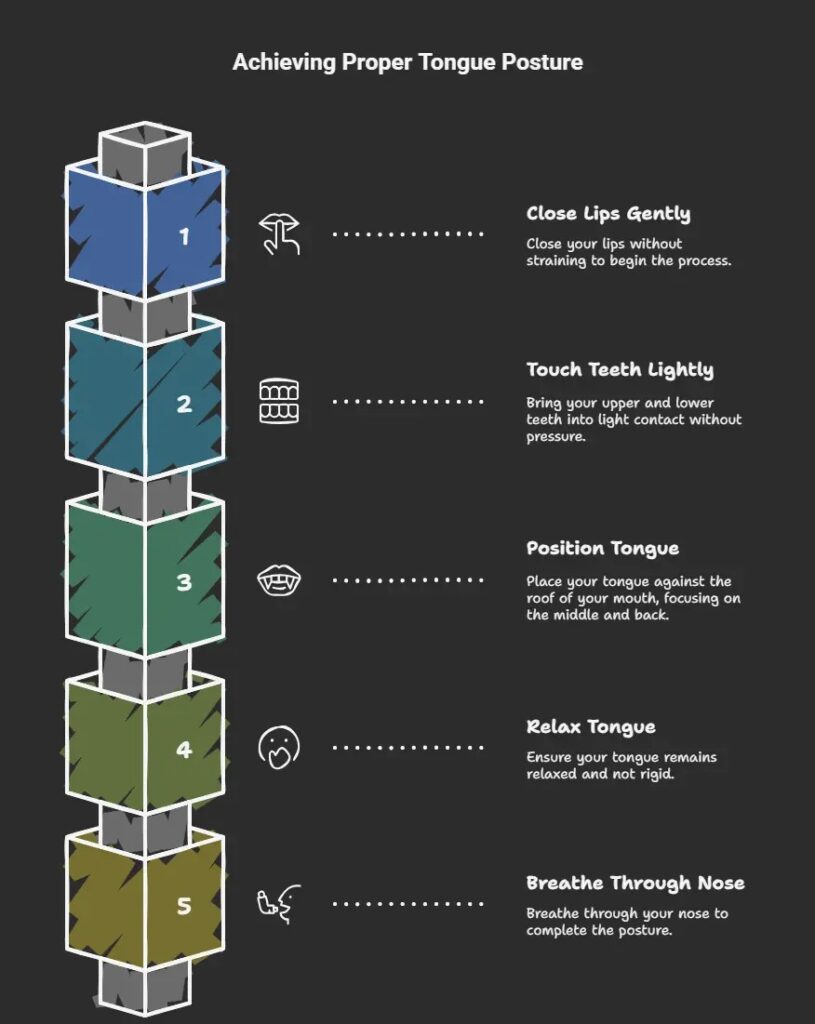
The key word is gently. Healthy tongue posture is a relaxed resting position, not hard pressure. If you feel jaw, tooth or face pain, stop.
What Is Myofunctional Therapy?
If you have real problems with tongue posture, breathing or swallowing, there’s an evidence-based option. Orofacial myofunctional therapy uses exercises for the tongue, lips and cheeks. According to Cleveland Clinic, it’s provided by trained specialists like speech-language pathologists and dental hygienists, and may help with:
- Mouth breathing that continues after nasal blockage is treated
- Tongue thrust
- Obstructive sleep apnea, usually alongside other treatments
- Teeth grinding and TMJ disorders
Treatment typically lasts 6 to 12 months.
What Actually Changes Your Jawline?
If your goal is a sharper jawline, these factors matter far more than tongue posture:
| Factor | What you can do |
|---|---|
| Body fat | Losing excess fat is the most common reason a jawline becomes more visible. A simple gym routine for losing fat helps |
| Genetics | Your bone structure is mostly set by your genes |
| Facial hair | A well-shaped beard can define your jaw. See our tips on growing a fuller beard |
| Posture | Standing tall with your head over your shoulders makes your neck and jaw look sharper in photos |
| Medical options | Orthodontics or jaw surgery for real bite or jaw problems, through a licensed specialist |
A Note on Nose Breathing
The site’s founder has practiced tongue-posture habits since 2021, not for looks, but to break a mouth-breathing habit. That’s a reasonable personal goal. If you breathe through your mouth a lot, snore or wake up with a dry mouth, see a doctor. These can be signs of nasal blockage or sleep apnea. Learn the signs of sleep apnea and how to sleep better.
Frequently Asked Questions
What is mewing?
Mewing is resting your entire tongue against the roof of your mouth, with the goal of changing your jawline. It was popularized online by Dr. Mike Mew.
Does mewing actually work?
There’s no scientific evidence that mewing reshapes the face in adults. The American Association of Orthodontists says it hasn’t been shown to benefit your jawline or oral health.
Can mewing change your jawline permanently?
Not in adults, whose facial bones have stopped growing. A more defined jaw usually comes from losing body fat, not tongue posture.
Is mewing bad for you?
Done forcefully, it can shift teeth, cause bite problems or lead to jaw pain, according to the AAO. A gentle, relaxed tongue position is fine for most people.
Does mewing replace braces?
No. Mewing can’t straighten teeth or fix bite problems. See an orthodontist for those.
Next step: If you’re unhappy with your bite, breathing or jaw, book a dental checkup. If your goal is a sharper look, focus on losing excess body fat and a clean grooming routine.
This article is for information only and is not medical or dental advice. Talk to a dentist or orthodontist before trying to change your bite or jaw.
This article is for information only and is not medical advice. Talk to a dentist or orthodontist about jaw, bite or breathing concerns.