
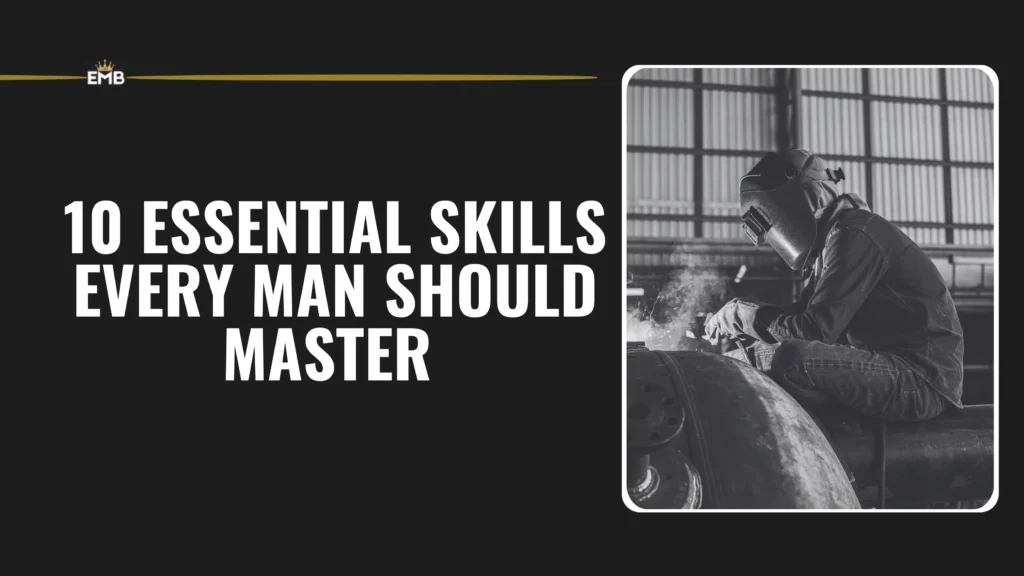
The most important skills every man should know are communication, emotional control, cooking and basic home repairs, managing money, grooming and fitness, handling conflict, networking, first aid, being a good citizen and owning your mistakes. None of them need talent. They’re learned with practice, and each one makes you more independent and easier to trust.
Key takeaways
- – Life skills are learned, not inherited. Practice one at a time.
- Listening well is the fastest way to communicate better.
- Cooking, budgeting and basic repairs save you real money.
- A first aid and CPR class takes only a few hours and can help you save a life.
- Owning your mistakes builds trust at work and at home.
Quick Overview: 10 Skills and Where to Start
| Skill | Why it matters | First step this week |
|---|---|---|
| Communication | Builds trust and prevents mix-ups | In one conversation, listen without planning your reply |
| Emotional intelligence | Helps you stay calm and read people | Name one emotion you feel each day |
| Cooking and home repairs | Saves money and builds independence | Cook 3 dinners at home |
| Managing money | Gives you security and choices | Track every expense for 7 days |
| Grooming and fitness | Helps you look and feel your best | Set a simple daily grooming routine |
| Conflict resolution | Keeps disagreements from blowing up | Practice “I” statements |
| Networking | Opens doors to jobs and opportunities | Send one check-in message to an old contact |
| First aid | Lets you help in an emergency | Sign up for a first aid and CPR class |
| Civic responsibility | Makes you part of your community | Check your voter registration |
| Personal accountability | Earns respect and trust | Admit one mistake and fix it |
What Are the Most Important Skills Every Man Should Know?
1. Communication
Good communication is about more than talking clearly. It’s about connecting.
- Listen actively. Focus on the other person instead of planning your response.
- Speak clearly. Say what you mean in plain words.
- Watch your body language. Make eye contact and keep an open posture.
2. Emotional intelligence
Emotional intelligence means understanding and managing your own emotions and recognizing how others feel. It includes:
- Self-awareness: knowing what triggers you
- Self-control: pausing before you react
- Empathy: seeing things from the other person’s side
If anger is the emotion you struggle with most, read about staying calm when an argument heats up.
3. Cooking and basic home repairs
These skills save time, money and stress.
- Cooking: Learn 5 simple, healthy meals you can make on a weeknight.
- Repairs: Learn to unclog a drain, fix a running toilet, patch a small hole in drywall and reset a tripped breaker.
4. Managing money
Money skills give you security and freedom.
- Budget. Know what comes in and what goes out each month.
- Build an emergency fund. Start small and add to it every payday.
- Learn investing basics. Understand how retirement accounts and index funds work before you need them.
5. Grooming and fitness
Taking care of yourself shows respect for yourself and others.
- Keep a clean haircut and a simple daily hygiene routine.
- If you have facial hair, follow a simple beard care routine.
- Find a type of exercise you enjoy, like lifting, running or yoga, so you’ll stick with it.
6. Conflict resolution
Conflict happens in every relationship. Handling it well shows maturity.
- Stay calm and lower your voice instead of raising it.
- Use “I” statements: “I felt frustrated when…” instead of “You always…”
- Look for common ground, even if you don’t fully agree.
- Take a break if things get too heated, then come back.
7. Networking
Networking is about building real relationships, not collecting contacts.
- Get comfortable with small talk. It’s often the first step to a real connection.
- Stay in touch with occasional check-ins.
- Offer help before you ask for it.
8. Basic first aid
Knowing how to do CPR, stop bleeding or help someone who’s choking can make a big difference in an emergency. The American Red Cross offers first aid classes online, in person and in a blended format. Hands-on classes let you practice skills with an instructor.
9. Civic responsibility
Being a good citizen means:
- Staying informed about local issues
- Voting in elections
- Volunteering or helping neighbors
- Supporting local businesses
10. Personal accountability
Accountability means owning your actions, admitting your mistakes and fixing what you can. It’s one of the fastest ways to earn trust. It also ties directly to self-control. Here’s more on owning your mistakes and building discipline.
How Do You Learn New Life Skills Faster?
- Pick one skill at a time. Trying all 10 at once rarely works.
- Practice weekly. Cook every Sunday, or do one small repair a month.
- Learn from people. Ask a friend, family member or neighbor to show you.
- Take a class. Community colleges, libraries and the Red Cross offer low-cost options.
Some of these skills can even earn you money. Explore skills you can turn into extra money.
Frequently Asked Questions
What skills should every man know?
Communication, emotional control, cooking, basic home repairs, money management, grooming, conflict resolution, networking, first aid and personal accountability.
What life skill should I learn first?
Start with the one that would make the biggest difference right now. For many men, that’s managing money or cooking a few healthy meals.
How can I improve my communication skills?
Practice active listening, speak clearly and pay attention to body language. Ask a follow-up question before giving your opinion.
Where can I learn first aid and CPR?
The American Red Cross offers online, in-person and blended classes. Many community centers and hospitals offer courses too.
Why is emotional intelligence important for men?
It helps you stay calm under pressure, handle conflict and build stronger relationships at work and at home.
Next step: Pick one skill from the table above and do its “first step” this week.