

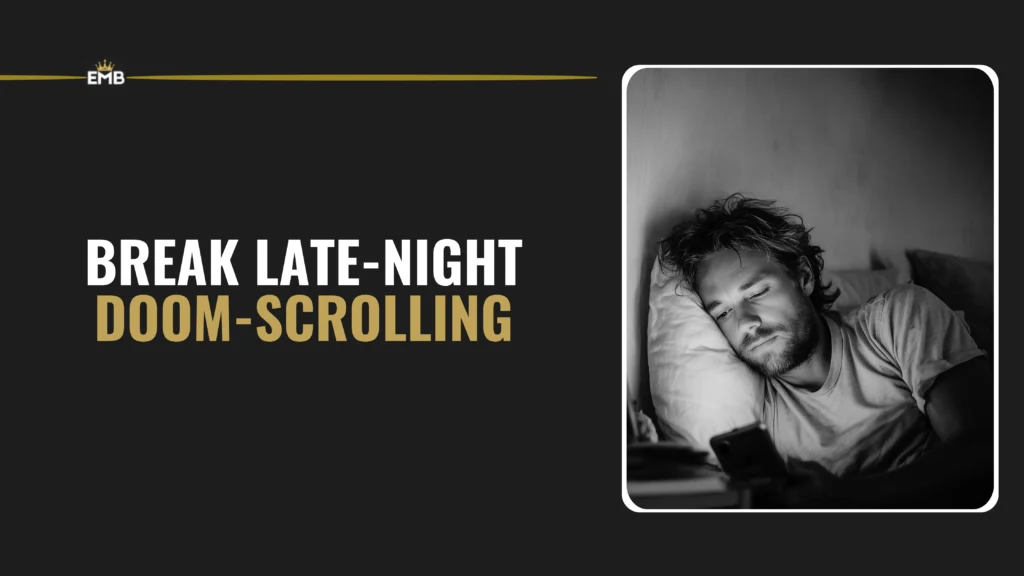
If you’ve ever told yourself, “Just five more minutes,” and suddenly it’s 1:30 a.m., you already know how this goes. The room is quiet. The lights are off. Your phone is inches from your face, and your brain feels wired even though your body is exhausted.
You’re not weak. You’re not lazy. You’re caught in a habit that thrives when you’re tired and alone with your thoughts.
Late-night doom-scrolling isn’t really about the phone. It’s what happens when the day finally shuts up but your mind refuses to follow. Stress you pushed aside shows up. Thoughts you avoided get louder. The phone becomes the easiest escape.
I’ve been there more times than I want to admit. Telling myself I’ll just check one thing, then losing an hour without noticing. Waking up the next morning frustrated, foggy, and already behind.
This isn’t about deleting apps or forcing discipline. It’s about understanding why this happens and setting your nights up to work for you instead of against you.
Let’s fix that.
Why Late-Night Doom-Scrolling Owns You at Night
During the day, you’re busy. You have structure. Deadlines. Noise. At night, all of that disappears. What’s left is silence, unfinished thoughts, stress you ignored, and a phone that offers instant distraction.
Your brain chooses the fastest escape.
Not because it’s smart, but because it’s exhausted.
At night, your willpower is gone. Your decision-making is weak. That’s why promising yourself “I’ll stop earlier tonight” rarely works. You’re negotiating with the worst version of your brain.
Doom-Scrolling Isn’t the Problem. It’s the Coping Tool.
Here’s the uncomfortable truth. You don’t scroll because you enjoy bad news or random clips. You scroll because, at night, it helps you avoid something you don’t want to sit with.
I know this because I do it too.
Most nights, I pick up my phone telling myself I’ll just check messages or scroll for a few minutes. No big deal. Then Instagram opens. One reel turns into ten. Next thing I know, it’s 2 a.m., my eyes burn, and my brain feels wired and tired at the same time.
That’s not an accident. That’s my brain looking for relief.
For most men, late-night scrolling shows up when one or more of these are sitting in the background:
- Mental noise that refuses to shut off
- Stress you carried all day but never dealt with
- A quiet feeling that the day wasn’t fully yours
- Loneliness you don’t say out loud
Scrolling fills the gap because it asks nothing from you. No decisions. No effort. No emotions to deal with. Just input.
The problem is what happens next.
Your brain gets small hits of stimulation while your body stays alert. Sleep gets pushed back. Thoughts get louder once you finally put the phone down. You lie there tired but restless, replaying the day or worrying about tomorrow.
So the next night, you do it again. Not because you’re addicted to your phone, but because your brain remembers that scrolling helped you escape for a while.
That’s why quitting through willpower doesn’t work. You’re trying to remove the one tool your brain uses to cope without replacing it with anything else.
Once you understand that, the goal changes. You stop asking, “How do I stop scrolling?” and start asking, “What am I avoiding at night, and what can I give my brain instead?”
That shift is where real change starts.
Step One: Stop Aiming for Less. Set a Hard Line.
I’ll scroll less” sounds reasonable, but it never survives a tired brain. At night, you are not thinking clearly. That’s why you need a rule that makes the decision for you.
A hard line beats self-control every time.
Pick a phone cutoff time that happens before you feel sleepy. Once you are tired, it’s already too late. For most guys, thirty to sixty minutes before bed is the sweet spot. The exact time matters less than sticking to it.
When that time hits, the phone is done for the night. No checking. No quick scroll. No exceptions.
Now comes the part that actually makes this work. You make scrolling annoying.
Not impossible. Just inconvenient.
Here are a few moves that help more than people expect:
- Charge your phone outside the bedroom so grabbing it requires effort
- Use a basic alarm clock so you are not “forced” to keep your phone by the bed
- Switch your screen to grayscale at night so apps lose their pull
- Log out of the apps that trap you the longest
This isn’t about punishment. It’s about protecting yourself when your guard is down.
When the phone isn’t right next to you, your brain doesn’t have to fight temptation. The choice disappears.
That’s the point.
You’re not trying to be more disciplined. You’re designing your nights so discipline isn’t needed.
Step Two: Replace the Scroll or You’ll Crawl Back to It
If you cut out scrolling and leave a gap, your brain will freak out. It hates silence, especially at night. That’s why most people quit for one night and fall right back the next.
I learned this the hard way. The nights I told myself, “No phone tonight,” and did nothing else were the worst. I just lay there restless until I grabbed the phone again.
You don’t need a strong replacement. You need a calm one.
The right replacement has a few simple qualities:
- Low stimulation so your brain can slow down
- No endless options that pull you back into choice mode
- Slightly boring so sleep can win
A few options that actually work:
- Reading a physical book, not articles or news
- Light stretching or slow breathing to release tension
- Writing one page in a notebook without overthinking it
- Listening to calm audio without autoplay or recommendations
This isn’t about improving yourself at night. It’s about giving your mind a soft place to land after a long day.
Once your brain knows there’s something else waiting, it stops begging for the phone.
Step Three: Dump the Thoughts That Keep You Awake
Most nights when you can’t sleep, it’s not because you’re not tired. It’s because your brain won’t stop talking. The moment your head hits the pillow, everything you avoided during the day shows up at once.
That’s usually when the phone comes out.
Doom-scrolling is how your brain tries to drown out unfinished thoughts. It feels easier than lying there with your own head.
A simple brain dump breaks that loop.
Before bed, grab a pen and paper. Not your phone. Writing by hand slows things down and makes it real. This should take five minutes, not more.
Write down:
- What’s bothering you right now, even if it sounds messy or dumb
- What needs to be handled tomorrow so your brain stops reminding you
- One thing you did right today, even if the day felt off
This is not planning. It’s unloading.
You are telling your brain, “I see this. I’ll deal with it later.” Once it believes that, it stops spinning the same thoughts on repeat.
The last point matters more than it sounds. Most men end the day focusing only on what went wrong. Writing down one win gives your mind a clean stopping point instead of an open argument.
You’re not fixing your life at night. You’re clearing mental space so sleep can happen.
Do this consistently, and the urge to reach for your phone fades because your brain no longer needs the escape.
Step Four: Make Your Bedroom a Sleep Zone Again
Your brain is always connecting dots. Right now, your bed might be linked to scrolling, overthinking, and stimulation instead of rest. That’s why you can feel exhausted and still not fall asleep once you lie down.
The goal is to teach your brain a new rule. Bed equals sleep.
You don’t need a full room makeover. Small changes done every night work better than big one-time fixes.
Start with the phone. If it’s within arm’s reach, your brain knows it’s an option. That alone keeps you alert. Put it across the room or outside the bedroom so the bed stops being a scrolling spot.
Light matters more than most people think. Bright light tells your brain it’s still daytime. About an hour before bed, dim the lights so your body starts slowing down on its own.
Use your bed for one thing. Sleep. Not videos. Not late-night planning. Not lying there replaying conversations. If you keep your bed tied to rest, your brain will respond faster over time.
Temperature and darkness also play a role. A slightly cool, dark room makes it easier for your body to settle. You don’t have to make it perfect. Just remove what keeps you alert.
Here’s what helps most:
- Keep your phone out of reach or out of the room
- Lower the lights as bedtime gets closer
- Use the bed only when you’re ready to sleep
- Keep the room cool and dark
This isn’t about forcing sleep. It’s about setting the stage so sleep shows up on its own.
When your space sends the right signal, your body doesn’t need motivation to rest.
When You Slip, Don’t Spiral
You’re going to mess up. Not because the plan is bad, but because you’re human. One late night doesn’t erase progress unless you let it.
The real damage happens after the slip.
Most guys have one bad night and turn it into a story. “I always fail.” “I have no discipline.” That mindset does more harm than the scrolling itself. It creates pressure, and pressure pushes you right back into the habit.
Don’t punish yourself. Don’t promise a reset next week. Just return to the plan the very next night.
Think in clean nights, not perfect streaks.
One clean night is a win. Two is momentum. Miss a night and continue like nothing happened. No drama.
What matters is showing up again before the habit pulls you back in.
Consistency beats intensity because intensity burns out fast. Consistency builds trust with yourself.
What Changes Faster Than You Expect
This isn’t about fixing everything at once. It’s about giving your brain a chance to recover.
Most guys expect results to take months. They don’t.
Within a week, small shifts start showing up:
- You fall asleep faster without fighting it
- Sleep feels deeper instead of restless
- Mornings feel less foggy
- Your attention feels more steady during the day
You may not feel like a brand-new man. That’s not the goal.
You feel clearer. More in control. Less scattered.
And once you experience that, going back to late-night scrolling feels less tempting. Not because you forced yourself to stop, but because you remember how much better this feels.
That’s how the habit starts to fade for good.
Take Back Your Nights
Doom-scrolling isn’t a personal failure. It’s what happens when a tired brain has unlimited access and no clear stop. Most men blame themselves when the real issue is how their nights are set up.
You don’t need more discipline. You need fewer bad options.
Fix the environment so the phone isn’t always within reach. Set one clear rule that removes the nightly debate. Give your brain something calm to fall into when the day ends.
That’s it.
You don’t have to overhaul your life. Start tonight with one rule and one replacement. Keep it simple enough that you’ll actually do it.
Your nights are the reset button for everything else. When sleep improves, focus improves. Mood improves. Mornings stop feeling like a fight.
Take control of your nights, and your days start lining up without force.