
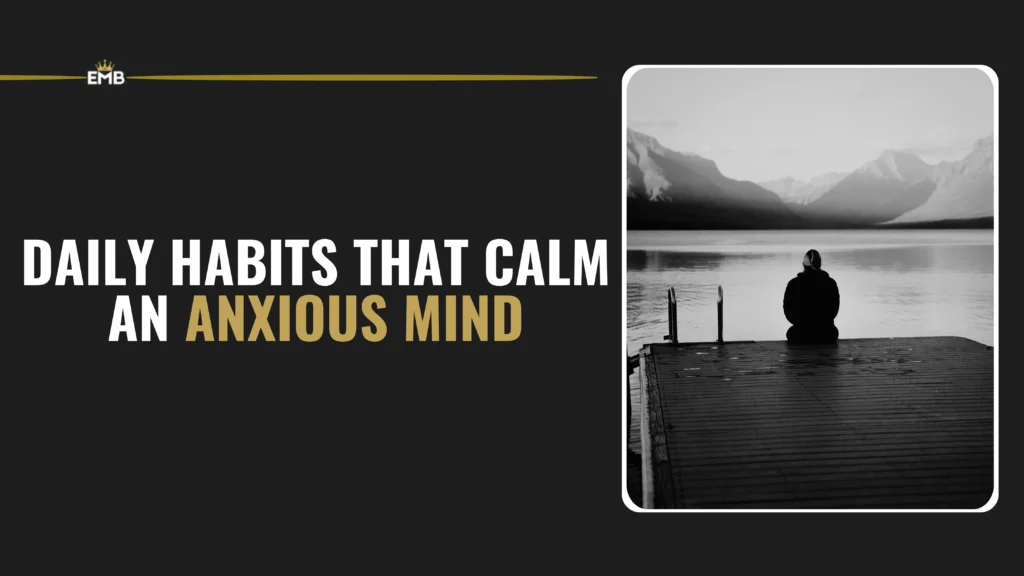
Anxiety doesn’t always look dramatic. For many men, it feels like pressure that never fully shuts off. Your mind stays busy. Your body feels tense. Even during quiet moments, you’re still braced for something.
You might push through it by staying productive, distracting yourself, or telling yourself it’s not a big deal. That can help in the short term. Over time, anxiety keeps returning because the system underneath never gets a chance to reset.
What actually helps isn’t a single trick or mindset shift. It’s how you live day to day. Small habits shape how your nervous system handles stress.
This guide focuses on daily habits that calm an anxious mind. Nothing extreme. Nothing complicated. Just steady ways to lower anxiety and feel more at ease in your own body.
Why Daily Habits That Calm an Anxious Mind Matter More Than Quick Fixes
Quick tools can calm anxiety when it spikes. Daily habits decide how often those spikes happen.
Anxiety builds when stress shows up repeatedly and never fully clears. Your body stays alert longer than it should. Over time, you become more reactive, more tired, and mentally overloaded.
Many men cope by staying busy. Work fills the gaps. Screens fill the quiet. Distraction keeps anxiety out of sight, but it doesn’t calm it.
Habits work because they retrain your nervous system. They teach your body that it doesn’t need to stay on guard all the time.
Habit 1: Move Your Body Consistently
Your body is designed to move. When it doesn’t, stress builds and stays trapped.
That trapped energy often shows up as restlessness, tight muscles, or a constant edge you can’t quite explain.
You don’t need intense workouts. You need movement you can repeat.
Helpful options include:
- Walking for 20 to 30 minutes
- Strength training a few times a week
- Cycling, swimming, or light cardio
- Stretching or mobility work
Consistency matters more than intensity. Regular movement helps release stress hormones and gives your body a clear signal that it’s okay to settle.
Most men notice their mind feels clearer and their body less tense after moving, even if the problems haven’t changed.
Habit 2: Sleep That Actually Supports Calm
Sleep and anxiety feed into each other. Poor sleep makes your nervous system more sensitive, which means stress feels heavier the next day.
If your mind races at night, don’t start by fighting your thoughts. Start by calming your environment.
Habits that support better sleep:
- Go to bed and wake up at similar times
- Put your phone away at least 30 minutes before sleep
- Lower lights in the evening
- Write down thoughts instead of carrying them to bed
Writing things down tells your brain it doesn’t need to stay alert to remember everything.
Sleep won’t solve every problem, but lack of sleep will make anxiety harder to manage.
Habit 3: Regulate Stimulants and Mental Noise
Caffeine can quietly fuel anxiety.
Too much can cause jittery energy, tension, racing thoughts, and trouble relaxing. Pay attention not just to how much caffeine you have, but when you have it. Cutting back or stopping earlier in the day often makes a noticeable difference.
Mental stimulation matters too.
Constant notifications, news, and scrolling keep your brain in alert mode. You don’t need to cut everything out. You do need breaks where your system isn’t being pulled in ten directions.
Less stimulation gives your nervous system room to recover.
Habit 4: Unload Your Mind Daily
Thinking about worries isn’t the same as processing them.
When worries stay in your head, they loop. They feel endless. Writing gives them a place to land.
A simple daily practice:
- Write down what’s on your mind
- Separate what you can control from what you can’t
- Leave the rest on the page
You’re not trying to solve everything. You’re clearing mental space.
This habit lowers background anxiety because your mind no longer has to carry everything at once.
Habit 5: Use Your Breath and Body as Signals
Your breathing patterns affect how anxious you feel. Shallow, fast breathing keeps your body in alert mode.
You don’t need long sessions. Short check-ins work.
Pause once or twice a day and slow your breath for a minute. Focus on longer exhales. That simple shift tells your nervous system it can ease up.
Body awareness matters too. Notice tension in your shoulders, jaw, or stomach. Relaxing those areas helps interrupt anxiety before it builds.
Habit 6: Choose Real Rest, Not Just Distraction
Not all downtime helps your nervous system recover.
Scrolling, watching videos, or staying busy can distract you, but they often keep your brain stimulated.
Rest that actually calms you is quieter.
Examples include:
- Walking without headphones
- Sitting outside
- Reading something light
- Doing nothing for a few minutes
Many men struggle with rest because it feels unproductive. But recovery is maintenance, not laziness. Your system needs low-pressure time to reset.
Habit 7: Stay Connected Without Pressure
Anxiety often leads men to pull back. Silence feels safer, but isolation usually makes anxiety stronger.
Connection doesn’t need to be deep or emotional every time.
Simple forms of connection help:
- Brief check-ins with a friend
- Shared activities
- Honest but short conversations
Even saying, “I’ve been dealing with a lot mentally lately,” can reduce the sense of carrying everything alone.
If anxiety starts affecting your work, health, or relationships, professional support is a practical step. Therapy isn’t about fixing you. It’s about learning skills you were never taught.
How to Build These Habits Without Overdoing It
Trying to change everything at once often increases anxiety.
Start with one habit. Pick the one that feels easiest or most helpful right now.
Signs a habit is helping include:
- Feeling slightly calmer
- Less mental noise
- Faster recovery after stress
Progress doesn’t need to be dramatic. Small, steady changes add up.
A Final Note
An anxious mind doesn’t mean you’re weak or broken. It means your system has been under pressure for a long time. Daily habits don’t remove stress from life. They change how your body responds to it. You don’t need perfect routines. You need steady support for your nervous system.
Start small. Stay consistent. Calm builds quietly, one day at a time.
When you focus on daily habits that calm an anxious mind, progress becomes steady instead of overwhelming.